|
| |
|
Emerging markets |
|
Extraordinary Performers |
| |
|
| |
|
Let's talk about it!
Extraordinary Performers- entrepreneurism in China
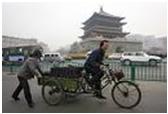
As we know China has become a demographic leader. The country has got a great potential.
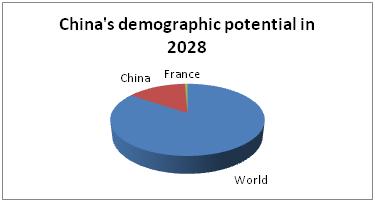
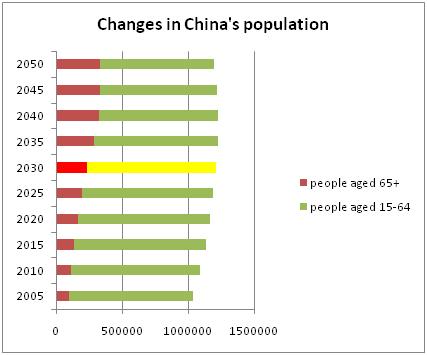
Such a huge market needs financial institutions but for a responsible bank it is not enough to assure the money for the investments or guarantee a save place where we can accumulate our assets. The question is how to respond to other needs for instance linked to the environmental problems and how to influence a society in a positive way.
In our opinion at the beginning we have to comprehend some of the fundamental changes in the Chinese economic and social system. We have to answer the question how entrepreneurship is being facilitated. It was said that:
"The things you see from there, you cannot see from here."
The responsible institution has to cooperate with the local people who know best the realities.
Also we need to take into account the role of the Chinese government. Although moving toward a more capitalist system, the government still plays a strong role in the economic environment of the country. The authorities last a main driving force for the Chinese economy but we have to remember that it is not a monolithic entity. There are national, provincial, and municipal governments. The regional governments' roles are the most significant in terms of creating the infrastructure to support entrepreneurship.
Sources:
1.Harvard Business School research .
2. Population Division of the Department of Economic and Social Affairs of the United Nations Secretariat, World Population Prospects.
China's Environmental Problems and Resources for the Future
Although someone has to pay the costs of an extraordinary economic growth. In fact The process of industrialization in China is often linked to deteriorating environmental quality. China as a country has to face the problems which are described in the report of Mongabay-world's most popular environmental science sites.
“Increasingly severe problems associated with industrial growth threaten the health of Chinese households. Sixteen of the 20 most polluted cities in the world are in China, the result of burning brown coal, the dirtiest kind available, and the growing numbers of cars on the road. In many parts of the country, water is so polluted from manufacturing waste that it is unsafe to drink. Deforestation has intensified annual summer dust storms, and the sands of the Gobi desert have come within 200 miles of Beijing.
Severe air and water pollution throughout the country has triggered significant medical problems that the state health system is struggling to address, including rising rates of cancer and respiratory disease. These broad problems will take decades to solve but current government efforts are addressing smaller, more specific issues; for example, work is now underway to control air pollution in Beijing.
Fortunately, the Chinese government has made pollution control an official goal [..]. One of these lessons is the need to contain the costs of necessary environmental quality reforms, given other competing priorities for scarce financial resources. This has increased the appeal of regulatory approaches that can improve environmental quality at a low cost. For this reason, Chinese environmental authorities have become very interested in U.S. programs that use market-based approaches to achieve the objectives of federal air quality standards at a lower cost than traditional regulatory methods.”
Source:
1. mongabay news
As we can see Chinese want to make reforms which can help to save the natural environment. But there is one condition: low cost. In our opinion it is a challenge for a bank.

1. How can we support these changes as a financial institution? Try to think about some banking products reserved for “ecological” investments.
2. How can we use the entrepreneurship of Chinese to stimulate a positive social changes?
Let's talk about it!
|
|
| - See comments (2)
|
|
|
|
Empty
|
|
|
|
|
|
|
| |
|
|
|
|
|
| |
COMMENTS |
|
|
|
|
|
| |
| |
|
|
| 2 Posted by: Jaroslaw Jozefowski, 21/02 15:47 |
| |
Apperently the policy you've mentioned has already induced some negative changes in gender structure of Chinese society. It is estimated that there is a 100-million deficit of women in China. Such a vast scarcity is claimed to be a combination of the aforementioned one-child policy and the patriarchal culture in China. Chinese equipped with ultrasound scanners can easily determine the sex of the child. Often when it is a girl they decide on abortion.
It may seem a funny issue. However, in fact it isn't that unimportant. Male Chinese are reported to live in an excessive amount of stress and frustration due to lack of women and difficulties with finding a wife. That obviously leads to a fall in productivity.
I think that the Chinese government will eventually decide that they have to stop this change and probably they will try to introduce some programmes of helping the women. There is a chance for Societe Generale. By entering the market with some special products for enterprising women. Again it would involve employing some local people. Also it may really improve the image of SG Group since the problem of gender equality is a fashionable issue nowadays.
What do you think about that? Do you think it may be profitable for SG?
If you want to know something more about the changes in China please refer to: http://www.gazetawyborcza.pl/1,86680,2480566.html |
|
|
|
| |
|
|
| |
| |
|
|
| 1 Posted by: thefish, 20/02 18:47 |
| |
|
Well, I think that the "one child" policy will soon or later drive the chinese economy into a crisis. Countries with less restrictive regulations will benefit from young and dinamic society maintaining low labour costs and investment atractivness. India can be given as an example of such a country. |
|
|
|
| |
|
|
| |
|
|
|
|
|
 |
|
| |
Ela, 02/03 21:33
Tomek, 02/03 20:45
asia, 02/03 20:15
gosia, 01/03 12:03
szczyps, 01/03 01:15
Jaroslaw Sojka, 01/03 00:09
Karol, 29/02 23:17
aneta, 29/02 17:37
merry, 28/02 23:14
Ula G, 28/02 21:28
|
|
|
 |
|
| |
|
|
|
| |
|
| |
|
| |
| Post-industrial developed countries |
|
|
|
| |
|
| |
|
| |
|
|
|
| |
|
| |
|
| |
| Less economically developed countries (LEDCs) |
|
|
|
| |
|
| |
|
| |
|
|
|
| |
|
| |
|
|
 |
|
|
Conference-The Transfer of Resources across Generations |
|
|
| |
Posted by: Adam Korczynski |
| |
27/02 at 18:05 |
|
|
| |
Check the details concerning the confernece |
| |
|
|
|
| |
|