Let's have a look at some figures!
Population in developed countries is getting older. This phenomenon has two main reasons long life and falling birth rate. Even though the first piece of information is positive both factors have strong influence on the modern societies and they extort some reforms.
We can observe that kind of changes in most of developed countries but to be precise we have to base our amylases in a specific region. In our opinion Europe is a representative example. Moreover it is important market for Société Générale-the responsible bank which will surely react to these changes.
Firstly we want you to look at some figures about population in Europe. The European Commission have prepared a report which clearly describe a society in 2030.
Green Paper on Demographic Change:
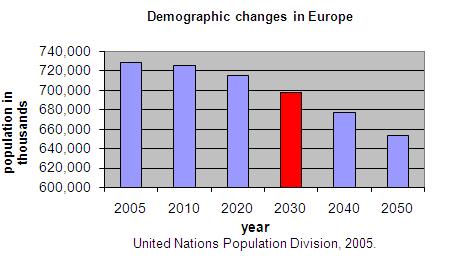
“From now until 2030 the EU will lack 20.8 million (6.8 per cent) people of working age. In 2030 roughly two active people (15-65) will have to take care of one inactive person (65+). And Europe will have 18 million children and young people fewer than today.”
The European population is shrinking. We can say that the pace of that phenomenon is alarming.
The first think we want to discuss it is a question: how Société Générale will find itself in that socioeconomic realities? There are two possible ways for a responsible institution.
The Group can adjust to the changes or maybe evoke them. In our opinion the best solution is a combination of that two possibilities. That is why we divided our analyses into two groups: ex ante and ex post solutions.
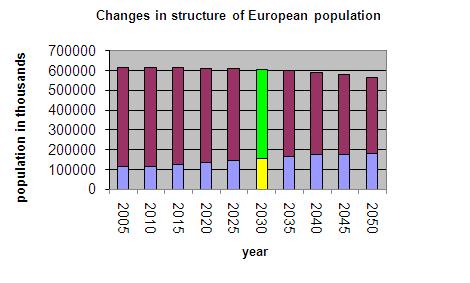
To find some solutions, first of all we have to look at the structure of the European society. The most important division concerns the number of people in productive and non-productive age.
As we can see the number of young people in the European society is decreasing.
We have marked two main solutions:
1. Use a capital of elder generation to stimulate economic and in result demographic growth among young people.
2. Respond to the needs of elder people especially in terms of capital management.
Sources:
1. Eurostat: Eurostat data
2. Population Division of the Department of Economic and Social Affairs of the United Nations Secretariat, World Population Prospects: The 2006 Revision and World Urbanization Prospects: The 2005 Revision.
We would like to invite you to post your opinions about that problem.

1. Try to think about the role of a financial institution in that process.Is it possible for a bank to influence a demographic growth?
2. The second question concerns the number of people in non-productive age.What kind of financial serviceswould be helpful for elderly people.(Try to think about some facilities.)
We would be greatful if you would share your opinion with us!