| |
|
Citizen Act Tools |
|
Best practices code |
| |
|
| |
|
|
Let's talk about it!
"Rivers know this: there is no hurry. We shall get there some day." (Winnie the Pooh)
Let's talk about it!
|
|
| - See comments (36)
|
|
|
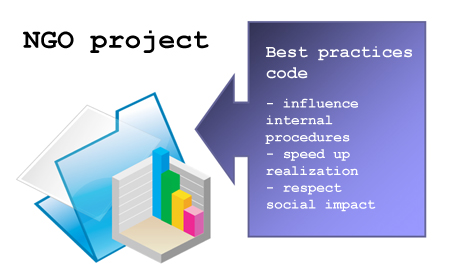
Best practices code is an internal act which helps procedures to work better. It is not binding as a rule but knowledge of these practices improve understanding and speed up the whole process. It is worth underlining that best practices code is not competitive to the official procedures. All procedures must be obeyed. Best practices code is a some kind of patch. It helps rules work more efficient.
We do want implement best practices code concerning cooperation with NGOs. As we presume, very soon banks will be not only financial institution but also know-how provider. Non-governmental organizations really need not only money but also help through knowledge. Non-profit institutions require a special treatment. And here comes the best practices code.
I am wondering what this code should include. Remember, Winnie the Pooh said: "A little Consideration, a little Thought for Others, makes all the difference." Do not hesitate to react.
Let's comment...
|
|
|
|
|
|
|
| |
|
|
|
|
|
| |
COMMENTS |
|
|
|
|
|
| |
| |
|
|
| 36 Posted by: Summary of discussion, 02/03 23:14 |
| |
NEW MEDIA
Dear All!
Please find below the short summaty of this exciting discussion!
1. Discussion sailed very often to the question: What should be the model of this code of best practice. Some of commentators claimed that there shuld be implemented strict rules that could guarantee the appropriate behavious of workers. On the other side the majority of participants of this discussion agreed on the statement that stict results could block the decision process. In the very sensitive project there must be enough space to make an appropriate decision.
2. Lots of people really liked the idea of code of best practice. They were sometimes dissapointed that our code is going to cover only cooperation with non-governmental organizations, because they perceived this idea as a really good solution to lots of problems.
3. There were brought up the problem of universal code of best practice that could embrace bigger number of corporations. It was assessed as a really innovative tool but probably not realizable.
4. There were lots of questions who is going to be the subject of this document. It was said that we believe in delegation and it is great when workers can make decisions at really low level. Because of that this best practice code must concern workers. Commentators touched the problem of how to arm people with authority without harm for the whole company
5. Participants took into account the content of code of best practices. They pointed out e.g. discrimination and inequality of parties. There turned out the problem of how to treat bigger organizations and smaller ones. How to take measurements.
Once again thank you all for taking part in discussion!
Marcin Gajewski
Urbanska team |
|
|
|
| |
|
|
| |
| |
|
|
| 35 Posted by: Marcin Gajewski, 02/03 00:18 |
| |
Dear kotwl, 01/03 23:04,
Only contacts with NGOs are subject of our interest in case of contact with NGOs. We cannot embrace all aspects of the bank's activities.
We want to take care really close to the aspect of handling with NGOs, involving into their actions, being active socially. We want to create the whole list of rules and demanded behaviours. We want bankers to take into account society's aspects when they take decisions.
I don't thinkit will be useless. We cannot build one huge document at once. Step by step, brick by brick and we can create documents in all areas of banking. We want to start from contacts with NGOs, maybe in Citizen Act III we will develop another one :) |
|
|
|
| |
|
|
| |
| |
|
|
| 34 Posted by: kotwl, 01/03 23:04 |
| |
|
Why did you write that this best practices code will concern only contacts with NGOs? Why do you forget about other aspects? Add it to the document. Without it it will be useless for the whole bank. |
|
|
|
| |
|
|
| |
| |
|
|
| 33 Posted by: Marcin Gajewski, 01/03 22:31 |
| |
Dear Katarzyna Ciągała, 01/03 18:25,
I think that it's really interesting idea. I was looking for it on the internet and I found out that similar solutions are implemented in region that I come from - Dzierzoniow. They organize such a meetings every single month and results are really exciting - the level of cooperation between NGOs and local government is unusually high. |
|
|
|
| |
|
|
| |
| |
|
|
| 32 Posted by: Katarzyna Ciągała, 01/03 18:25 |
| |
|
One of the key points of the best practices code should be meeting of the representatives of local governments, companies and NGOs. They would meet and discuss the most important and urgent issues to avoid mutual missunderstandings. |
|
|
|
| |
|
|
| |
| |
|
|
| 31 Posted by: Michał Majdański, 29/02 21:40 |
| |
max: There is the question of finding this happy medium. These principles must be not to strick in other case they can bind workers. We cannot afford these rules to decrease ability of making decisions.
Good point of view. In every organizations where we can observe some kind of hierarchy the best practices should flow from top to bottom. Thanks to this mechanism these behaviours reach bigger prestige and workers eagerly obey them. |
|
|
|
| |
|
|
| |
| |
|
|
| 30 Posted by: max, 29/02 19:41 |
| |
|
I like that you don't want to create so many so strict rules. It would be useless, but when you write it more generally, it is more likely to pass over some rules. I think that better examples of managers and coroprate culture are the only ways to avoid it! |
|
|
|
| |
|
|
| |
| |
|
|
| 29 Posted by: Marcin Gajewski, 29/02 02:51 |
| |
Dear max, 28/02 22:12,
I agree with you, however from the very beginning we were thinking about code for all employees, not for lower groups.
Anyway I cannot agree with you that bosses and top managers today act unethical and don't obey the rules. From my experiences in most cases the top level managers were setting the standards of behaviour and other employees could only follow good and better examples! |
|
|
|
| |
|
|
| |
| |
|
|
| 28 Posted by: max, 28/02 22:12 |
| |
Best practices code shouldn't obligate to actions only the lower level employees. It should be a common principles for all levels of employees. Usually ordinary employees are supposed to obey ethic rules and what about top managers? They can do whatever they want, they don't take care of anything...
What more, top level managers must be obligated by best practices code when they make decision. It will make them undertake some social actions that they wouldn't be like to. |
|
|
|
| |
|
|
| |
| |
|
|
| 27 Posted by: Michał Majdański, 27/02 10:37 |
| |
jamonja: Good point. The disadvantage of this document is big level of generality.
We would like to make this document a little bit more precise. It is easier for us because we want to concentrate only on NGOs and cooperation between bank and NGOs. In this document must be visible global civic society approach. All statements must be clear and procedures transparent. This "civic patch" must work automatically. Difficult task but realizable:) |
|
|
|
| |
|
|
| |
| |
|
|
| 26 Posted by: jamonja, 26/02 13:28 |
| |
Best practices codes are widly known and a lot of companies have such a document. It's an interesting idea, because the best practices code doesn't obligate people to act following the certain rules, it just encourages people to do so.
I think that this kind of thinking in case of cooperation with outside organizations is especially important because it demands the most sensitive and usually decisions. It is not only about acting fair - it is about movements supporting the idea of civic society, people's awareness about their civic rights and encouraging them to certain movements. |
|
|
|
| |
|
|
| |
| |
|
|
| 25 Posted by: Michał Majdański, 25/02 16:46 |
| |
Marek Matuszczyk: I can say life is not easy and try to make procedures easier. Let's try to feel like a bank. They have lots of money to administer. They must have coherent rules which they follow. In other case the future of this bank would not be bright.
Recently we saw really big problems of bansk with credits. They borrowed lots of money and they cannot get them back. Something was wrong but nobody knows where is the problem. Probably assessing the credit risk was not good enough. It is the biggest challenge in front of banks. They must discover the credit risk assessing mechanism that will not produce bad debts.
It is also the question regarding NGOs. We must think up something that secure both sides. Banks must be secure about their money and NGOs want to create society- valuable projects. Consensus must be achieved and we are thinking about it. |
|
|
|
| |
|
|
| |
| |
|
|
| 24 Posted by: Michał Majdański, 25/02 16:33 |
| |
Maciej Żygłowicz: You are totally right. It is problem. And of course a company cannot afford to discriminate any group. But it is more the question of people. We can educate them, we can try to persuade them that discrimination is wrong but it is long-lasting process.
Permanent learning and freedom of information are the most important factors in civic society. We try to implement some of these important things, e.g. in e-learning. It must be underlined and be a focal point in undertaking any steps. |
|
|
|
| |
|
|
| |
| |
|
|
| 23 Posted by: Marek Matuszczyk, 24/02 09:56 |
| |
|
Write about the easier accessible money. Today preparing a business plan is one of the most consuming tasks for NGOs. Banks require a really particular plan of expenses, actions and other steps. They want to plan everything. They should understand that sometimes it is not possible task to do! Plans of NGOs actions should be flexible to fit them to the current situation. No business plan – just general plans of actions, objectives and measures, vision – not forecast – they are my propositions! |
|
|
|
| |
|
|
| |
| |
|
|
| 22 Posted by: Maciej Żygłowicz, 24/02 01:30 |
| |
|
Did you think in your project about the race and sex discrimination? They are very important factors of the society-friendly company. No company which discriminate some groups can be relly good because the corporate culture will not allow to the highest quality of the product! |
|
|
|
| |
|
|
| |
| |
|
|
| 21 Posted by: Bartłomiej Olszewski, 23/02 15:37 |
| |
answer to Krzycho
Rewarding is not the best idea. The researches about motivating people proved that rewarding raise the internat competition inside the company. However the company's culture should contribute the growth of quality of service. |
|
|
|
| |
|
|
| |
| |
|
|
| 20 Posted by: Krzycho, 22/02 16:12 |
| |
Generally good practice code is only the rules that employees of the bank are SUPPOSED to obey, but they are not strictly obligated.
Maybe it should be changed. Punishments are not very good idea, so maybe you would reward the best employees? Customers will give their opinions about quality of service and the best workers in every department will be from time to time choosen.
It could raise the quality customer service essentially! |
|
|
|
| |
|
|
| |
| |
|
|
| 19 Posted by: Marek Matuszczyk, 21/02 17:30 |
| |
|
This is a great idea! Old ways of communication are BORING! It better to use only camera, 30 sec., then I click send and my question is asked :) It is cool! I have never being willing to write and read so much. YOU TUBE rules! :) |
|
|
|
| |
|
|
| |
| |
|
|
| 18 Posted by: Marcin Gajewski, 21/02 15:13 |
| |
Dear Jacek Doletkowski, 21/02 10:34
I think that general criteria are good solution, the question is only how to assess the scale of social activity. It should depend only on the point of view of the bank's employees, however the scale of the projects should be adjusted to the size of NGO (we cannot agree that 3 middle size actions are enough in case of multinational NGO! They are enough in case of regional NGO that has 20-30 members! |
|
|
|
| |
|
|
| |
| |
|
|
| 17 Posted by: Jok, 21/02 12:20 |
| |
|
Societe Generale would start consulting their policy with NGOs. If the company wants to be responsible to the society, it should adjust its policy to the social aspects. More - the form of consultation allows Societe Generale have instant knowledge from the changes on the market. Having direct contact bank can react immediately on all changes on the market. |
|
|
|
| |
|
|
| |
| |
|
|
| 16 Posted by: Jacek Doletkowski, 21/02 10:34 |
| |
|
You should make the whole system of criteria that assess social activity of NGO. It can contain such aspects as solvency, percentage of NGOs assets involved directly in social activity, society’s opinions about NGO, kind of activity and so on. |
|
|
|
| |
|
|
| |
| |
|
|
| 15 Posted by: Bartłomiej Olszewski, 21/02 01:30 |
| |
Best practices code should be a statement, not a list of indicators. As Marcin wrote, we must believe in people.
Decisions also should be made by people, not by list of indicators. In my opinion this is the most important thing about the best practice code. Criteria must be flexible, sometimes there is a special situation – NGO want to implement very good project, all funds will be repaid, but indicators shows that the liquidity of NGO is too low. But it will repay for sure and it will be project really positively affecting the society… What to do? Should the bank reject request for credit because of lacks in some indicators? I don’t think so…
|
|
|
|
| |
|
|
| |
| |
|
|
| 14 Posted by: Marcin Gajewski, 20/02 21:02 |
| |
Post moved from "The global news 6"
11 Posted by: Jok, 19/02 23:02
Form of roadmap is the best form. Nonflexible form of document doesn’t respond current situation. If you set anything for longer period of time and situation will change, you will be tied with invalid plans. The flexible form should include more vision and aims that should be fulfilled than any specific plans of action. Specific plans of actions are made immediately before action, not 2 years before.
|
|
|
|
| |
|
|
| |
| |
|
|
| 13 Posted by: Marcin Gajewski, 20/02 19:57 |
| |
Dear Marek Matuszczyk, 20/02 19:07
I think you are too scared about cheating. Try to trust the people :)
History proves that too stroct control always drives to patology. People hate the rules and they are not willing to obey it. They do only because of the rules and possible punishments. The whip is not the right way.
The idea of best practices code is totally different. We want to believe in delegation. We want to give subordinates responsible tasks. |
|
|
|
| |
|
|
| |
| |
|
|
| 12 Posted by: Marek Matuszczyk, 20/02 19:07 |
| |
|
That sounds much more reasonable. But indicators must be put somewhere. Without them the possibility of cheating will be too high. |
|
|
|
| |
|
|
| |
| |
|
|
| 11 Posted by: Marcin Gajewski, 20/02 18:21 |
| |
Dear Marek Matuszczyk, 20/02 12:45
They can be specified in other documents but rather not in good practice code… It should be more a statement, declaration than list of indicators. What is more it should be universal – the same for everybody. We can’t write an encyclopedia! Just couple main points! |
|
|
|
| |
|
|
| |
| |
|
|
| 10 Posted by: Marek Matuszczyk, 20/02 12:45 |
| |
|
But those criteria must be specified. How you can measure it? It can’t be just subjective opinion of the bank’s employee |
|
|
|
| |
|
|
| |
| |
|
|
| 9 Posted by: Marcin Gajewski, 20/02 10:33 |
| |
Dear Marek Matuszczyk, 20/02 07:17
They are more commercial aspects. What do you think about the idea to put to the good practice code only statement that social activity of the customer should be considered during trading with him? Indicators in the good practice code are not best solution. |
|
|
|
| |
|
|
| |
| |
|
|
| 8 Posted by: Marek Matuszczyk, 20/02 07:17 |
| |
Definitely when we are talking about the cooperation with NGOs, paying attention to the social activity of the company should be one of the most important determiners of assessing NGOs.
Banks should give special discounts or lower interests credits when NGO is going to take it for social aims.
Good practice code should contain some indicators that will allow check easily whether NGO is acting for really social aims and how effective it is.
|
|
|
|
| |
|
|
| |
| |
|
|
| 7 Posted by: Jacek Doletkowski, 20/02 02:29 |
| |
|
Maybe you should try to begin multicorporation discussion about the universal best practices code. Every single organization should be invited. The result will be an universal best practices code that everybody should follow. It’s not important whether you work for private or public, what branch etc. Main rules should obligate everyone. |
|
|
|
| |
|
|
| |
| |
|
|
| 6 Posted by: Marcin Gajewski, 20/02 00:45 |
| |
Dear Mati, 19/02 20:36
Good idea! On the one hand polite behavior and approach: "customer the king" is still driving behavior of the workers.
Rude and unpolite behavior is something that happens today very seldom, usually in state institutions.
Anyway the good practice code will obligate everybody, including state workers so we definitely have to add it to the code! |
|
|
|
| |
|
|
| |
| |
|
|
| 5 Posted by: Marcin Gajewski, 20/02 00:35 |
| |
Dear Łukasz Makuch, 19/02 20:58
I totally agree with you that social enerprises are the very high perspective group of customers for the bank. However remember that our project is focused first of all on CSR activities connected with NGOs, not on gaining directly new groups of customers to the bank.
Bank can attract new customers by the opinion of socially responsible company, but it would be a good idea to contribute by cooperation with social enterprises. |
|
|
|
| |
|
|
| |
| |
|
|
| 4 Posted by: Łukasz Makuch, 19/02 20:58 |
| |
|
Apart from thinking only about NGO's as a client or beneficiary od bank's support you should also consider social enterprises, as a potential and very perspective client. |
|
|
|
| |
|
|
| |
| |
|
|
| 3 Posted by: Mati, 19/02 20:36 |
| |
I believe that one of the most important statements of the best practices code should be the main rules of the staff behavior. In a lot of institutions (not only governmental) staff is rude and unpolite about the customers. Customers don’t have any choice, they have to use services of this unit because it is a monopolist (especially in case of local administration).
Rules of behavior and the rule: “customer the king” should be obeyed. |
|
|
|
| |
|
|
| |
| |
|
|
| 2 Posted by: Marcin Gajewski, 18/02 23:40 |
| |
Do you think that best practices code should distinguish different kinds customers? Should one NGO be promoted more than others? Or should NGOs have better terms than any other customers?
In my opinion it should rather stress the equality of all kinds of customer. |
|
|
|
| |
|
|
| |
| |
|
|
| 1 Posted by: Jacek Doletkowski, 17/02 23:42 |
| |
I think that best practices code should contain guidelines how to behave in case of NGOs, which are conducting pro-society projects. The rules for them should be less strictly
In best practices code should be also found the model example of cooperation between NGO and corporation. All employees should be obligated to do their best to follow the model. |
|
|
|
| |
|
|
| |
|
|