|
| |
|
Interviews |
|
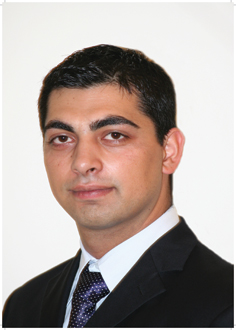
Iulian Paraschiv - about gypsies and discrimination |
| |
|
| |
|
Let's talk about it!
Iulian Paraschiv is the president of the National Association of Youth Roma from Romania, vicepresident of the National Chamber of Roma Representatives from Romania and founder of the “European Roma Youth Network”.
We thank him for his support and for offering our team Supporters an interview in English about gypsies in Romania and discrimination.
Let's talk about it!
|
|
| - See comments (12)
|
|
|
Could
you please tell us a little bit more about the organization you are leading?
What are its objectives and its regular activities?
Our main objective is
supporting intercultural dialogue, tolerance, self respect, promote understanding
and cooperation between the majority and Romas, developing education, culture
and information domains.
We are militating
against discrimination, equal opportunities for Roma especially for Roma
youngsters, we militate for the preservation of traditions, developing a new elite
of Roma and encouraging the right of free expression.
What do
you consider to be Romas’ major problems, both on a national and international
level?
From my point of
view, the main issue is education and close connected to this is the labor
area, health, housing and discrimination issues.
In your
opinion, what is the psychological trigger that determines people to have this
negative attitude towards gypsies? How are you fighting against these
misconceptions and what can be done on both sides to solve these issues?
The discrimination
against Roma is starting from childhood and it is continued in schools, when
sometimes mothers have a saying for their kids: „be quiet because the gypsies
will steal you”. It’s hard to imagine that this kinds of things are possible in
the XXI century, but we should admit that there are not few the cases when Roma
children are suffering only because they are born like this.
Our organization is
trying, with its tools, to change the negative imagine and attitude towards Romas.
Last year we initiated a campaign at the Bucharest level regarding the special
places for Roma pupils in high schools and art schools, and this year we will
continue this campaign at a local level, when we will have territorial offices.
Another tool which we
are using in order to change the perception of Romas, is to promote those youngsters
who have talents for music, picture or who are studying at famous universities.
Those youngsters want to show that the Roma people have value and more than
that, if they have the opportunity they can develop the same as the others. To
be honest, we should recognize that we express sometimes a negative attitude to
the majority. A part of the Roma minority is practicing early marriages, this
thing being a bad step for developing the child’s personality, but in order to
stop this thing we should unify our forces, Roma NGO’s and civil society.
Do you
know capable young Romas that have wasted their talents and skills, or haven’t
had the opportunity to personally develop, because of discrimination, racism or
lack of chances in education?
At this moment the
number of students who leave school is high, this thing is happening mainly because
parents don’t have the possibilities to send their kids to school.
Children can’t
develop their capacities if they can’t study (the average is 50%), and for
those who, with big efforts, can follow the classes, it is very hard to apply
afterwards what they have learned.
In the
past there have been several national programs for encouraging Romas’
education. What impact and effective results did these programs have on
youngsters?
Those kinds of
programs bring a lot of benefits for Roma youth because as a result, the number
of Roma youngsters integrated in the educational system is growing year by
year. Those programs have an important role, but the state should have a higher
implication.
Do you
believe it could be of use to implement such programs on a long term and
constantly sustain the young Romas’ development?
I think yes, but with
the condition to develop resources and tools very well established and very
targeted objectives.
What is
at the moment the employability rate among gypsies? Are there any actions taken
to try to facilitate their job hunt? On what kind of places are they usually
hired?
I think that 2%, many
of them are working on the black market and another part is working in the west
countries.
On a
long term, how many years do you think will pas until people will be able to
really integrate Romas in the society?
From my point of
view, in order to solve these social problems it will take a lot of time. In
practice we need political interest to solve these issues. To eliminate the
negative perception for Roma we need a long time and a lot of efforts from the
media and the civic society. I am optimist and I think that if we, as
youngsters, take position we will be able to mobilize our capacities not only
because we are the future but also because if we live in present then we will
live in a healthy society.
|
|
|
|
|
|
|
| |
|
|
|
|
|
| |
COMMENTS |
|
|
|
|
|
| |
| |
|
|
| 12 Posted by: Monica, 29/02 15:58 |
| |
|
I think this is the biggest fight, because you deal with the prejudices of the people. Every day I am more and more astonished by people that have big pretences of cultured and open mind persons and that say that they would will all the romas from everywhere. This is the more complex fight |
|
|
|
| |
|
|
| |
| |
|
|
| 11 Posted by: Alexandru Cosmin Buteica, 28/02 23:02 |
| |
|
Dear Deea, yes, what you stated is true. But I honestly think that the solution for Romas is not supporting them with financial aid, but with education. This is the first step to be made If they are simply given money, they probably won’t be able to make a living out of it, or will not succeed in making a decent life. That is because they might consider that receiving money like that might happen again. Therefore there should be a massive campaign, especially for young Romas, for education. And also their parents should be convinced to let their children go to school. |
|
|
|
| |
|
|
| |
| |
|
|
| 10 Posted by: Catalina, 28/02 18:26 |
| |
|
I have to say that i somewhat agree to what Deea said, that there are many Romas who indeed are beggars and make their children do the same. It is true that Romania's image throughout the world is very much affected by what the Romas do. On the other hand there are talented, intelligent Romas who cannot develop their talents because they are not given the opportunity. I believe that this problem can only partly be solved by raising awareness. I have to agree with Iulian Paraschiv that what is needed is a massive political involvment. If the government does not take the initiative it will be long until the Romas are integrated in society. I am hopeful that the government can be persuaded to act through these kind of inititives like the one Supporters are developing. |
|
|
|
| |
|
|
| |
| |
|
|
| 9 Posted by: Deea, 28/02 16:14 |
| |
The Romas are a part of our community, whether we like it or not. I have to say that I am sorry for what happens to them, that they are discriminated by Romanians, and I have to agree with Andreea m who says that some of them are even better that some Romanians. But I have to ask...who is destroying the image of Romania in Europe? Is it Romanians or romas? Who is attacking Romanian women on the streets, who is begging for bread, who is selling their children for nothing? A very low percent of Romanians, but the most of romas. I'm sorry to say this. And no matter how much we would try to change anything, they will be the same. Do you really think that if the Romanian government would help them, they would stop begging and stealing? I don't think so. I remember what happened with a group of romas, which were sent back to Romania from France with 3.000 euros for each family, if I recall well. In addition, they spent the money and went back there. So what is the bottom line here? No matter of the help they receive, they keep on coming back to their habits. I'm really sorry for this and I'm very disappointed, but this is what they do. Yes, there may be honest romas out there, there may be talented children who need our support. I admire their culture and their traditions and I would love to see romas children who are encouraged to spread their wings and show the world that romas are not all about stealing and begging. I want to see them proving the contrary. So supporters, help their talented children, and help all the children that need the FORCE to be with them!
|
|
|
|
| |
|
|
| |
| |
|
|
| 8 Posted by: Irina, 28/02 11:15 |
| |
What Supporters are trying to achieve is very
brave and very difficult as well.Considering that many Roma parents make their children beg from early ages instead of sending them to school will make it harder in changing mentalities. |
|
|
|
| |
|
|
| |
| |
|
|
| 7 Posted by: Maria-Alexandra Dabu, 27/02 23:14 |
| |
Buna Marilena,
Multumim mult pentru sustinere si pentru toate ideile pe care le-ai postat pe blog. Cat de curand vor aparea si la sectiunea Your ideas, intrucat, asa cum v-am promis, vrem sa si concretizam cumva efortul vostru.
Cu acesta ocazie doresc sa ii incurajez si pe altii sa ne scrie commenturi in orice limba le este mai la indemana, inclusiv romana. Limba oficiala Citizen Act este engleza, de aceea toate informatiile le veti gasi traduse, insa acest lucru nu inseamna ca si voi trebuie sa postati commentarii neaparat in engleza.
|
|
|
|
| |
|
|
| |
| |
|
|
| 6 Posted by: andreea m, 27/02 21:23 |
| |
i must say that i agree with marilena,and i have to say there are a lot of gypsies that are even better that some Romanians!
only because there are diiferent of us,and they have other culture ,doesn't mean that we are better than them.
|
|
|
|
| |
|
|
| |
| |
|
|
| 5 Posted by: Alexandru Cosmin Buteica, 27/02 12:48 |
| |
Dear Amelie,
Here is an excerpt from an online magazine (DIVERS):
---> Most Italian citizens overestimate the presence of Romanians and Roma ethnics in Italy. The number of Roma ethnics in Italy is either unknown (for 56% of those interviewed), either exaggerated - 80% of those who say they know their number estimated them at over two million.
This superficial knowledge is also confirmed by the answers regarding the nationality of Roma ethnics in Italy: over 50% believe almost all of them are foreigners, while only 20% know that most of them are Italians.
As usually, the lack of information generates an aversion towards the Roma ethnics, writes Corriere della Sera. Almost 61% of Italians state that they do not like Roma ethnics and 20% state that they don’t really like them. Also, Roma ethnics are the least appreciated category of immigrants followed by Albanians and Romanians.
Asked what is the first thing that comes to mind when they hear the word “Roma” the most frequent answer of Italians (over 25% of cases) were "thief", followed by "nomad".
In this situation, it is not surprising that for 70% of Italians it is difficult, if not quite impossible, to live together with the Roma ethnics: for 34% of those questioned, this possibility is not a pleasant one, while for 36% this is a problem.
Most of those who reject living together with the Roma ethnics (and Romanians) are part of the center-right electors, but a significant number of those also support other political forces, adds Corriere della Sera.
37% of those questioned believe that “it is impossible to reconcile such different cultures", and 34% believe that "Roma ethnics do not make the necessary efforts to make it possible to live together". ---
Well, unfortunately there is a big misconception regarding Romas and Romanians. They are all assimilated as Romanians and therefore our image is denaturized. Still, I strongly believe there is an exaggerated hate towards Romas. There are some who commit illegalities, but there are also exceptional Romas, talented hardworking people, who try to fit in a society, but they are blocked and deprived of making themselves heard. They are all catalogued as bad people. Totally wrong. Here is were we should act. At people’s mentalities. How? By creating awareness in communities, through campaigns, and by supporting talented Romas and exposing their image to the society, showing that Romas have also great people who may achieve wonderful things. |
|
|
|
| |
|
|
| |
| |
|
|
| 4 Posted by: amelie, 27/02 12:21 |
| |
interesting definition…and again I agree that we call them gypsies or other names only to disparage them
but, you remember the problems that occurred din Italy, we romas we accused of stealing and killing, I can’t help but woder what attitude should we have in this kind of situation? |
|
|
|
| |
|
|
| |
| |
|
|
| 3 Posted by: Alexandru Cosmin Buteica, 27/02 11:55 |
| |
So...regarding the Roma word for gypsies here's a short description of it, from wikipedia:
The Romani or Romany people (Devanagari:, as a noun, singular Rom, plural Roma; sometimes Rrom, Rroma) or Romanies. They also belong to many ethnic groups that appear in literature and folklore, and are often referred to as Gypsies or Gipsies, a term that is sometimes considered pejorative and is based on a mistaken belief of an origin in Egypt. The term is, however, still in widespread official use, for instance in the UK. In actuality, the Roma have their origins in India.
The Roma are still thought of as wandering nomads in the popular imagination, despite the fact that today the vast majority live in permanent housing. This widely dispersed ethnic group lives across the world not only near their historic heartland in Southern and Eastern Europe, but also in the American continent and the Middle East.
Indeed the most widespread word is gipsy nowadays. And this roots in people's indifference and will to learn more about an ethnic group that just like all of us, have traditions, cultures and so on.
We should stop calling them, just as Iulian Paraschiv said in this interview, thiefs or bad people. No. This is a misconception that is widely spread, and all it does is harm their image and badly influence their actions too.
|
|
|
|
| |
|
|
| |
| |
|
|
| 2 Posted by: amelie, 27/02 11:40 |
| |
I didn’t even know that Romas was a word for gypsies… why is that? I would say because we are not interested to put these people at the same level with us, but rater ridicule, criticize and accuse them.. just for being part of a certain ethnic group
moreover.. if people really decide to accept gypsies and get closer to them, the community will be rather sceptic and will try to discourage him..:(
|
|
|
|
| |
|
|
| |
| |
|
|
| 1 Posted by: Marilena, 26/02 13:27 |
| |
|
Sunt sigura ca numai actionand putem schimba mentalitatea oamenilor in ceea ce priveste minoritatea rroma. Trebuie sa sensibilizam semenii, sa eliminam discriminarea rasiala si sa intelegem ca toti avem dreptul la egalitatea de sanse si la afirmare. Sunt optimista in ceea ce va priveste si va sustin. Bafta! |
|
|
|
| |
|
|
| |
|
|
|
|
|
 |
|
| |
Maria-Alexandra Dabu, 02/03 23:53
Alina France, 02/03 23:52
Monica, 02/03 23:30
Alina France, 02/03 23:29
Alina France, 02/03 23:11
Monica, 02/03 23:06
Monica, 02/03 23:02
George, 02/03 23:01
Monica, 02/03 22:58
Monica, 02/03 22:58
|
|
|
 |
|
| |
|
|
|
| |
|
| |
|
| |
| About Corporate Social Responsability |
|
|
|
| |
|
| |
|
| |
|
|
|
| |
|
| |
|
| |
|
|
|
| |
|
| |
|
| |
|
|
|
| |
|
| |
|
| |
|
|
|
| |
|
| |
|
| |
|
|
|
| |
|
| |
|
| |
|
|
|
| |
|
| |
|
|
 |
|
|
The final countdown! |
|
|
| |
Posted by: Alexandru Cosmin Buteica |
| |
02/03 at 01:35 |
|
|
| |
Dear supporters, today is the last day of the blog's activity. We invite you to post your final thoughts, conclusions and so on. We posted results for polls, new films and all your ideas proposed until now, summed up! Thank you all! You are great! Together we will change the world! |
| |
|
|
|
Last 2 days for the wikiblog! |
|
|
| |
Posted by: Maria-Alexandra Dabu |
| |
02/03 at 01:01 |
|
|
| |
Dear friends, we remind you that these are the last 2 days of the wikiblog's activity. We invite you all to express your final thoughts, opinions, ideas and remarks, regarding the FORCE initiative! |
| |
|
|
|
New surprises addded! |
|
|
| |
Posted by: Maria-Alexandra Dabu |
| |
02/03 at 01:04 |
|
|
| |
You may find a
new film posted in the multimedia section! Also you may find new interviews and
answers to all your questions through comments, and make sure you see our new
supporters from prestigious US universities on the special thanks page!
Stay close to us! Let’s make a
difference!
|
| |
|
|
|
Be a part of the changing process |
|
|
| |
Posted by: Maria-Alexandra Dabu |
| |
27/02 at 01:25 |
|
|
| |
… not just a
spectator! Give us a hand and change the world! |
| |
|
|
|
New interviews & new partners! |
|
|
| |
Posted by: Alexandru Cosmin Buteica |
| |
26/02 at 02:07 |
|
|
| |
New interviews added! Check them out! More and more partners are joining our initiative! A list of them is available on the partners' page!
Stay tuned for more surprises in the next days! |
| |
|
|
|
Fresh, right from the oven! |
|
|
| |
Posted by: Maria-Alexandra Dabu |
| |
02/03 at 01:08 |
|
|
| |
Check
out the new films and interviews we have posted. They’re new, they’re
fresh, they’re irresistible… you have to see them! Don’t forget to vote
on the new
poll page, your ideas section! |
| |
|
|
|
Thank you Supporters! |
|
|
| |
Posted by: Maria-Alexandra Dabu |
| |
19/02 at 00:36 |
|
|
| |
We are happy to see the interest you show in this project. We also invite you to visit our wikiblog within the next days, because we have special surprises prepared for you.
And don’t forget, only with your help we can make this
happen! |
| |
|
|
|
Welcome to our wikibog! |
|
|
| |
Posted by: Alexandru Cosmin Buteica |
| |
15/02 at 00:48 |
|
|
| |
Hello to everybody! We kindly welcome you to discover what our project is about and post comments in order to help us develop it, and the community that surrounds us!
Stay tuned for new updates still to come! |
| |
|
|
|
Supporters launch wikiblog! |
|
|
| |
Posted by: Alexandru Cosmin Buteica |
| |
11/02 at 06:09 |
|
|
| |
The wikiblog is currently being updated with information and new materials! Stay close as we develop our project together! |
| |
|
|
| |
|