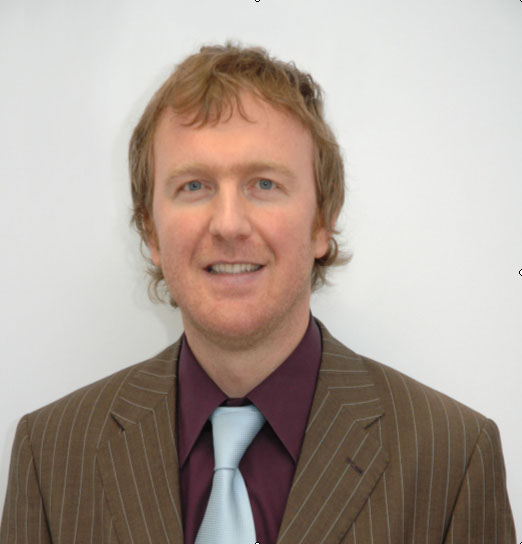
Florin Luca, HR Executive Director, BRD – Groupe Société Générale
Starting 2003, Florin Luca is the HR Executive Director of BRD – Groupe Société Générale, the second largest bank in Romania (700 centers, 8000 employees, 16-20 % market share). Previous officer, graduate of the Special Military School Saint-Cyr - public finances, licenced in History and with a Master's degree in Business Law from Sorbona University-Paris, Florin has beend activating in BRD - Groupe Société Générale ever since 1999. He holds an extensive experience in the management, the organization and the functioning of major international companies, as well as in the management of human resources.
When was the CSR concept introduced in Societe Generale? What impact did it have on the HR Department? What projects on CSR did the HR Dept implement or how did it contribute to the implementation of CSR on the holding level?
For more than 20 years, Groupe Societe Generale gets involved in social responsibility projects.
Internationally, the Groupe´s investment in CSR in the last 5 years overcomes 70 million euro. The sum was allocated for programs of social responsibility in the areas of humanitary initiatives, sports, culture and education.
BRD follows the example given by the Groupe: we have invested in CSR projects more than 7 million euro since 2000 until present.
The strategy of social responsibility of Groupe Societe Generale is adressed to the following cathegories:
- Clients on the financial markets
- Employees, through social policies which encourage the diversity and team spirit
- Members of the community in which they exercise their activity, through policies of long term involvement
As a branch of the Groupe, BRD acts on these three levels. Furthermore, the bank invests in CSR mostly in areas in which Societe Generale is involved: humanitary initiatives, culture and sports.
Citizen Act is a CSR program in itself and is mainly HR oriented. What are the objectives of this project and what are the benefits for Société Générale on long term basis?
The Groupe will continue to get involved in programs of sustainable development and to approach programs which are representative for the Groupe’s culture and image.
Undependently if we are talking about humanitary initiatives, of sports or culture, this involvement shows a clear vision and a good structured strategy concerning the intentions of the Groupe.
Humanitary initiatives:
Societe Generale founded in 2006 the so called “Societe Generale Foundation for Solidarity”. The Foundation supports projects in the area of social integration and of struggle against analphabetism. The Foundation is also involved in supporting defavorized children and handicaped persons.
The caritative association of the employees of Societe Generale, “Talents and Partage”, is involved in humanitary projects and projects of social integration.
Sponsorships for culture
The Groupe supports classical music, modern and contemporaneous arts, young artists.
The first partnerships of the Groupe in the musical area started in 1987. Since then, they are in a constant evolution. The partnerships answer to the to the present needs of developing the classical music: educating the youngsters, supporting the contests and music festivals, supporting the contemporan artistic projects, promoting the inovative projects that facilitate the access to music.
Societe Generale is a sponsor of modern and contemporan art, owning one of the biggest private collections of art. Societe Generale wishes to bring art closer to the public or, organizing exhibitions in the most important art museums of France and from other countries. In June 2007, 40 works from the Groupe’s collection have been exposed at the National Museum of Modern Art of Romania.
Sports partnerships
Societe Generale permanently have been supporting, for 20 years now, the French rugby. The values of this discipline are a part of the company’s values. Rugby and the Societe Generale employees have in commun values like: engagement, teamspirit, respect, tolerance. As in rugby, the 120,000 employees form a team with a strong personality, where the cultural diversity is one of the one of the most important strenghts.
Alongside with rugby, Societe Generale supports the French Golf Federation and the Bridge Federation.
Furthermore, an important aspect of the Groupe’s strategy is the support of the Hadisports (sports with modified rules meant to allow handicaped persons to practice it). Since 2003, the Groupe supports the Paralmpic Games – the Olympic Games for handicaped persons.
The social responsibility at BRD is a management process through which we seek to contribute at the development of a Romanian sustainable and performant society.
According to the Societe Generale strategy on the world level, but also to the local needs, we chose to get involved in five areas: art and culture, sports, humanitary initiatives and environmental protection.
We believe that our role as a social actor is to promote values like inovation, team spirit, respect for the diversity and engagement. They are the starting point of our performance.
Art and Culture
Diversity, inovation and independence are values that we support and we always bring forward. They become obvious in the artistic and cultural area and that is why we get permanently invoved in projects and cultural events.
We support projects of theatre, film, classical music, contemporan art and we get involved in supporting and promoting the Romanian cultural patrimonium. We promote cultural exchanges between Romania and France, through the partnership with the French Cultural Institutes of Romania.
Education
The youngsters are the most important capital for the Romanian society of tomorrow, that means also for the companies that are active in Romania. We help the youngsters to become true professionals, by getting involved not only financially, but also personally – using the experience of our own employees.
We are active in the univeristary environment, through partnerships with students’ associations, but also through other initiatives. For example, through the Academic Scholarships we award prizes to students with very good results. In 2007 we launched for the students of the Academy for Business Studies of Bucharest, the so called Citizen Act - business game on long lasting development and sustainability.
Sports
Sports are, beyond victories and show, a mean of educating strong personalities. That is why we support sports inside the company as well in the communities we active in.
We apreciate the values that rubgy promotes: engagement, respect towards the adversary, team spirit, tolerance. This is the reason why we have been supporting the Romanian rugby for more than 7 years.
We support other sports as well. BRD is the partner of the Romanian Tennis Federation, being the official sponsor of the Romanian Davis Cup team. Starting from 1998, BRD has been the official partner of the Romanian Cyclism Tour.
Humanitary initiatives
The people are the centre of our concerns and this is the reason hy we try to help the underpriviledged. Among the ones who beneficiate of our support there are children, elderly persons, persons with disabilities or homeless.
BRD has been, for many years now, the partners of some associations for helping underprivileged children and elderly persons.
Volunteering emplyees
Through volunteering projects, in which many of our employees got involved, they have shown that they do have the same values that we promote as a comany.
One of our concerns is to develop among our employees a culture of the responsibility towards the problems that surround and to build together solutions to improve them.
In 2007, 11 BRD employees participated at the construction of a house in Radauti, Romania through the Eurohabitat project.
We have also build the project “Donate for life”, a blood donation project through which we try to bring our contribution to the solving of the crisis of blood in hospitals.
We do not fail in initiating social projects, there are lots of projects for donations of clothes, toys, books for disadvantaged children and family, as well as for redirectioning 2% of the taxes on income towards associations and NGOs.
As a HR Manager, would you hire a beneficiary of the “Chances Seen Reachable” to work by your side in the company? What conditions does he have to fulfill? What methods are necessary in order for these conditions to be fulfilled?
At BRD, anyone has the chance to be employed as long as the person demonstrates that he/she can understand the BDR environment and culture and wishes to be a part fo this great team.
Practically, when we recruite we carefullt analyse the position that has to be occupied, the job’s profile und last but not least, our values and our culture. For us, the potential of a person is far more important than the knowlegde in certain fields of interest. In many cases, the potential of an employee is even more important than the professional experience.
When it comes to junior positions, the person’s experience will not matterm what we are searching for is the potential of development and of adaption to a continuously developing market. We are not interested in only one type of specialization or in the grades the person obtained in school, but in the identification of the person’s abilities, such as commercial abilities, abilities to communicate, of analysing a given situation, as well as the capacity to work in teams and of identifying himself/herself with the Groupe’s values.
Furthermore, we are interested in a great deal in the enthusiasm towards working at BRD, in his/her real reasons. That means that at BRD you can meet students of economics, law, phylosofy, history and ... (why not?) medicine.
But even more important than the things I’ve mentioned is the “diversity”, an important concept at the Grouep’s level.
The diversity is also a very important aspect of the recruitement activties at BRD. As I mentioned, we recruite young persons, as we recruite personnel in their 45-50 years of age or older. We recruite graduated persons, as we recruite personnel with medium studies. They can come from th economic, juridic, but also polytechnical, filologic or jurnalistic environments. We recruite personnel with Romanian, as well as with foreign citizenship.
In order to facilitate the hiring persons with handicap we adopted an integration plan concerning firstly measures of accessibilization of the physical envirnmoent, of identification of the positions and of recruitement of personnel from this cathegory of persons.
From our point of view these criteria represent the starting point in attracting tho best. We know that there exist youngsters witout financial possibilites, that do not have the opportunity to go to school because they simply do not afford it. And then, maybe their chance can be companies as BRD, which will want to invest in programs of supporting the education of these underprivileged children. It is important that these programs are present through fezable projects and then the involvement would be possible.
What do you think are the three basic conditions for a CSR project to be successful?
The key element is the dedication. Then, supporting the ideas with effort and resources and as important as the already mentioned aspects, are the surveillence and continuity of the projects, becauese it happends often that an ideas, at beginning launched with much enthusiasm, gets lost on the way.
The Romanian teams selected to participate in the second phase of Citizen Act overcome by number the teams from other countries. How is this to be interpreted?
Young Romanians have shown, on many occasions that they are competitive, that they wish to get involved, they wish to obtain results. The implication of many youngsters in this project is a proof that the Romanian society has chances to grow, because the future is theirs. By getting involved in projects that have the goals to improve the lives of others, to offer chances for the ones without possibilities to have success in life and career, to support the less fortunate and to create and keep a healthier life environment, they will show the world which is the potential of an idea when you really wish to change something.
How do you measure the success of a project? What impact do you think CSR initiatives have on your image as a bank?
For us, at BRD, the best example of acknowledgement for the involvement in a project of this kind is the prize awarded to BRD – Groupe Societe Generale in 2007 by the Business Students´ Organization (ASER) for being the “most desired employer”. Furthermore, our bank has won a diploma for “the highest involvement in the students´ environment”. A truly deserved acknowledgement, regarding our involvement in the student’s ´environment.
We are present at the job fairs dedicated to young people, at seminars organized by the students’ associations and we get involved in actions of students’ NGOs. We have updated the web page and we frequently use the central and local press to promote more programs for graduated students, with good knowledge of French and English, motivated and open to geographical mobility. The most popular programs are “A career in commerce”, “Young inspectors” and “Grandes ecoles francaises”.
Our strenghts are the belonging to a powerful international group, a company culture that is based on values that are not only slogans, constant interest and care for individual career management and for social dialogue. Furthermore, at BRD, as well as in the whole Societe General Group, we don’t have a “kleenex” type of human resources policy, that means that people are not hired, used and then thrown away, like tissues.
Another project of great impact that we implemented in BRD is bond to attract the persons with handicap.
The promotion of this concept is meant to change the mentality of persons without handicap in what concerns the potential of the people with handicap. The project has a character of continuity and is coordinated by the team of the Social Relationsof the Human Resource Department. We identified and implemented the necessary measures to facilitate the hiring and integration of these persons at BDR. A campaign has been made to inform the employees about the way to interact with the persons with special needs, as well as to include those people in programs of professional development and of their monitoring throughout the activity. For an optimal communication between the bank and the potential beneficiaries of this integration plan, as well as for a mediatization in the NGO area of the BRD initiative, there was already a collaboration relationship between BRD and the Society of locomotory handicaped people of Romania. BRD is a path opener, because the initiative was the first of its kind in the Romanian bank sector. BRD has the opportunity to use a important capital, insufficiently exploited and contributes to the socio-professional reintegration of this defavorized cathegory, neglected until now. Furthermore, through promoting this program in the mass media, BRD wishes to attract the attention of other Romanian companies on the role that they have in the practical application of the principle of chances equality.
Investing in CSR in one of SG’s goals / principles / guidelines. Do you think all your employees share this point of view? How do you make them identify with CSR?
Yes, our employees share these principles and do get involved, as I mentioned. Of course, the first step in making them consciously aware and then getting them actively involved in this kind of projects are the initiatives of the Bank concerning the involvement and support for social projects or sponsorships. Permanently communicating these initiatives creates a sentiment of closeness to the Groupe´s values, to the supporting spirit, which animate most of our employees. Then, the next step would simply be to attract them in the initiatives described above, independently if we talk about cultural activities, the participation in a cross for caritative purposes or in the construction of houses for the homeless.
Thank you very much!
|